Cost Control

Nov 9, 2023

Running a successful small business requires a keen eye for financial management, and one of the critical aspects is controlling expenses.

Running a successful small business requires a keen eye for financial management, and one of the critical aspects is controlling expenses. As a small business owner, mastering expense control is key to achieving long-term sustainability and growth. Here’s a comprehensive guide on how to take charge of your expenses and foster financial health:

  1. Create a Detailed Budget

Start by establishing a comprehensive budget that outlines both fixed and variable expenses. Regularly review and update this budget to reflect changing circumstances. A well-defined budget serves as a roadmap, helping you identify areas where expenses can be trimmed without compromising essential operations.

  1. Monitor and Analyse Spending Patterns

Regularly monitor your business expenses and analyse spending patterns. Use accounting software or financial tools to categorize and track expenditures. This visibility allows you to identify unnecessary costs and make informed decisions on where to cut back.

  1. Negotiate with Suppliers

Build strong relationships with your suppliers and don’t shy away from negotiations. Seek discounts for bulk purchases, explore loyalty programs, and compare prices from different vendors. Offer your supplier something in return, like early payment discount. It’s much easier if both parties win from the negotiation. Conversely, simply bullying your suppliers into discounts creates animosity and could damage your long-term relationship. Negotiating effectively can lead to significant cost savings on the goods and services essential to your business.

  1. Embrace Technology for Cost Efficiency

Leverage technology not only for automation but also for cost efficiency. Consider cloud-based services and software solutions that offer scalable pricing models. This way, you only pay for what you need, avoiding unnecessary expenses on unused features.

  1. Encourage a Cost-Conscious Culture Among Employees

Instil a culture of cost-consciousness among your team members. Educate employees on the importance of managing expenses and encourage them to contribute ideas on how to cut costs. Often, those closest to day-to-day operations can offer valuable insights. Potentially it might make sense for your business to offer a share in the savings with employees who contribute to cost savings, building engagement and healthy collaboration

  1. Regularly Review Subscriptions and Contracts

Audit your recurring subscriptions and service contracts periodically. Determine if you are getting value for money from each service and whether there are more cost-effective alternatives available. Cancelling or renegotiating contracts can lead to substantial savings.

Conclusion

Controlling expenses is a fundamental skill for small business owners aiming for financial stability and growth. By creating a detailed budget, monitoring spending patterns, negotiating with suppliers, embracing cost-effective technology, fostering a cost-conscious culture, reviewing subscriptions, managing travel expenses, you can take control of your expenses and pave the way for a financially robust and thriving small business. Remember, every dollar saved is a dollar that can be strategically invested in the growth of your business.

Book a Demo

Follow us

Get the latest news and travel inspiration.

Continue Reading

Multi client supplier payments card splits vs single bank account

Multi Client Supplier Payments Bookkeeper: Card Splits vs Single Bank Account

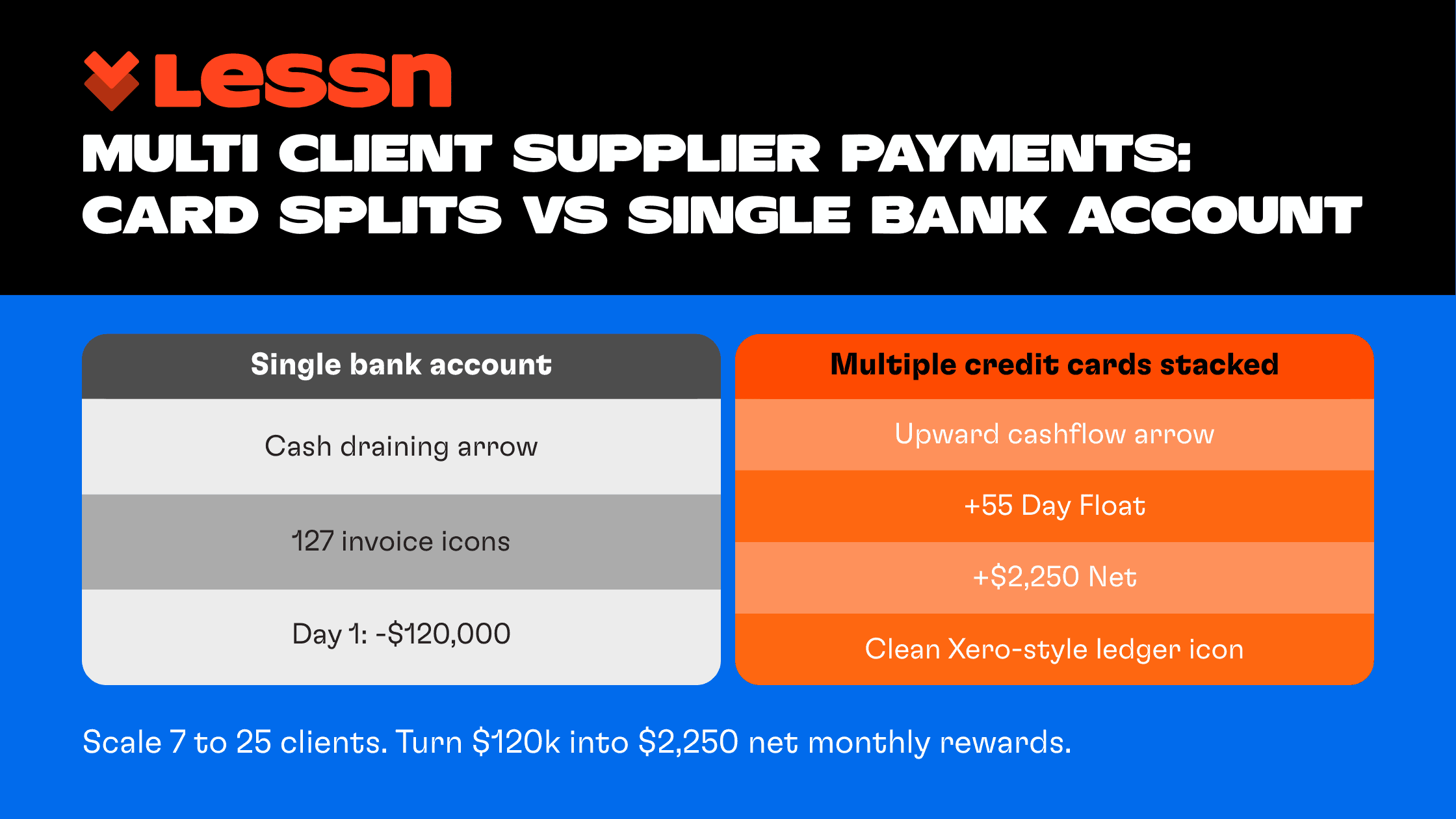
Seven clients processing $120,000 a month is where most bookkeepers hit a wall. A single bank account drains cash on day one, creates reconciliation risk across multiple ledgers, and caps growth at seven clients because accounts payable simply takes too long. By contrast, a card split model turns the same $120,000 batch into 55-day float, automated Xero multi-client reconciliation, and more than $2,000 in monthly net rewards. Platforms like Lessn allow bookkeepers to fund supplier payments across multiple cards while keeping each client entity clean, isolated, and audit-safe. For a modern multi-client supplier payments bookkeeper, card splits vs a single bank account is no longer a preference — it’s the difference between being stuck at seven clients or scaling to 25+ without adding admin hours.

Feb 25, 2026

T+1 property management payments australia clients paid next business day

T+1 Property Management Payments Australia: Clients Paid Next Business Day

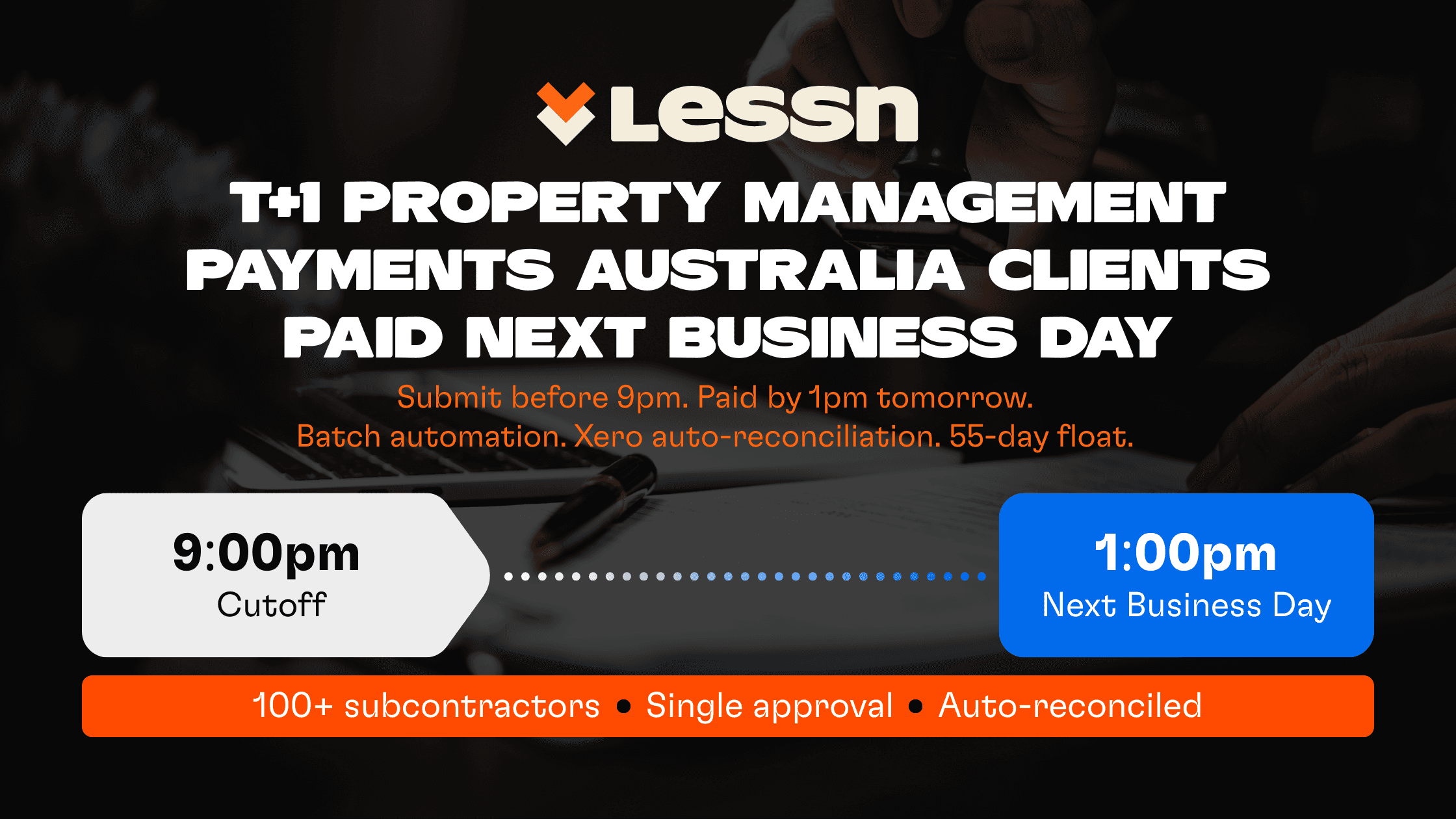
Late payments create risk for property managers. Subcontractors lose trust, owners lose confidence, and manual ABA files slow everything down. T+1 property management payments in Australia change this entirely. Payments submitted before 9pm AEST are guaranteed to land the next business day by 1–3pm — giving property managers certainty, speed, and control. With batch automation, card-funded float, and Xero auto-reconciliation, platforms like Lessn allow firms to scale to 100+ properties without adding admin headcount. When payments are predictable, compliance is built in, and cashflow works smarter, property teams gain back time, trust, and capacity.

Feb 25, 2026

Batch Month-End Credit Card Payments to Suppliers with 70% Touch Time Reduction

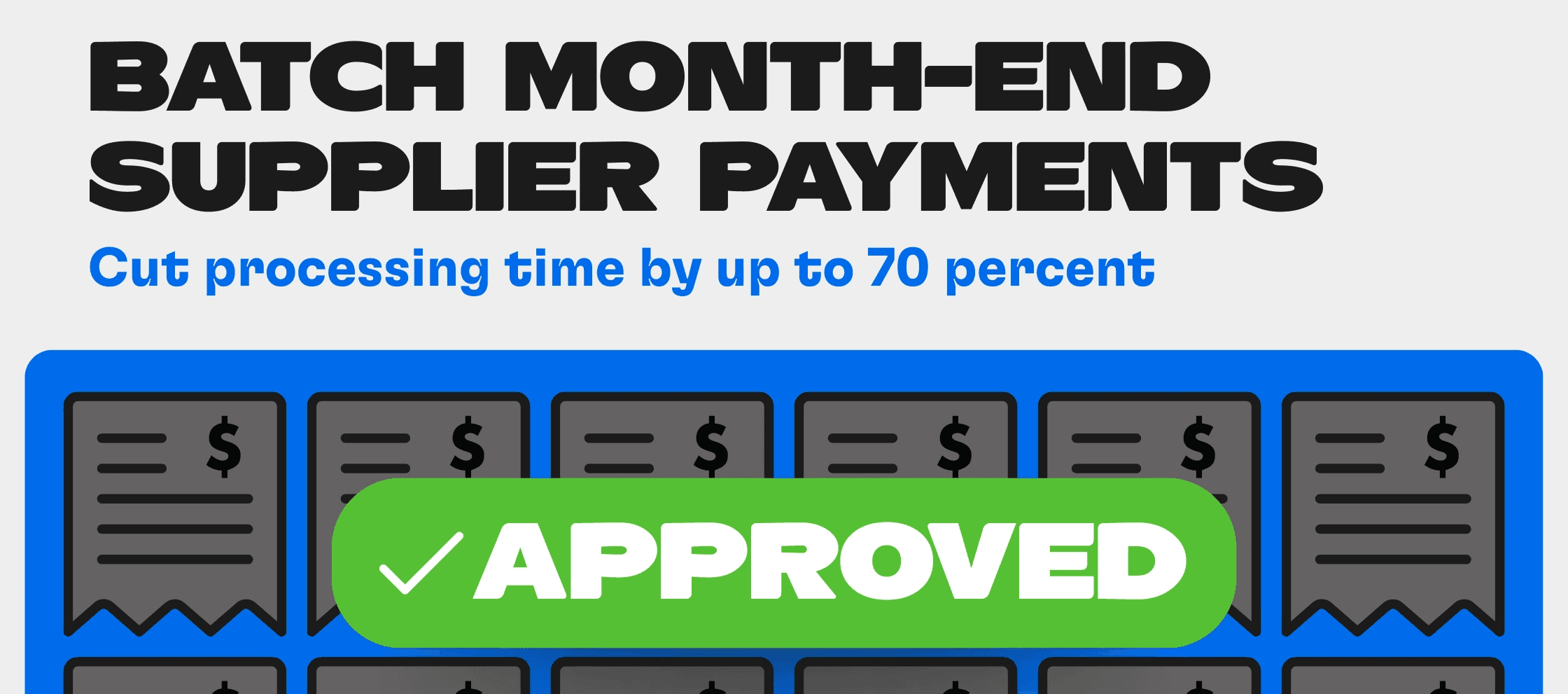
Month-end supplier payments don’t need to take days. This guide shows how Australian businesses and bookkeepers batch credit card payments to cut touch time by up to 70%, unlock up to 55 days of float, and auto-reconcile in Xero and MYOB—using Lessn, even when suppliers don’t accept cards.

Dec 19, 2025

Multi client supplier payments card splits vs single bank account

Multi Client Supplier Payments Bookkeeper: Card Splits vs Single Bank Account

Seven clients processing $120,000 a month is where most bookkeepers hit a wall. A single bank account drains cash on day one, creates reconciliation risk across multiple ledgers, and caps growth at seven clients because accounts payable simply takes too long. By contrast, a card split model turns the same $120,000 batch into 55-day float, automated Xero multi-client reconciliation, and more than $2,000 in monthly net rewards. Platforms like Lessn allow bookkeepers to fund supplier payments across multiple cards while keeping each client entity clean, isolated, and audit-safe. For a modern multi-client supplier payments bookkeeper, card splits vs a single bank account is no longer a preference — it’s the difference between being stuck at seven clients or scaling to 25+ without adding admin hours.

Feb 25, 2026

T+1 property management payments australia clients paid next business day

T+1 Property Management Payments Australia: Clients Paid Next Business Day

Late payments create risk for property managers. Subcontractors lose trust, owners lose confidence, and manual ABA files slow everything down. T+1 property management payments in Australia change this entirely. Payments submitted before 9pm AEST are guaranteed to land the next business day by 1–3pm — giving property managers certainty, speed, and control. With batch automation, card-funded float, and Xero auto-reconciliation, platforms like Lessn allow firms to scale to 100+ properties without adding admin headcount. When payments are predictable, compliance is built in, and cashflow works smarter, property teams gain back time, trust, and capacity.

Feb 25, 2026

START REWARDING YOUR HARD WORK TODAY

Join Australian businesses turning payments into rewards.

© 2026 Lessn. All rights reserved.